



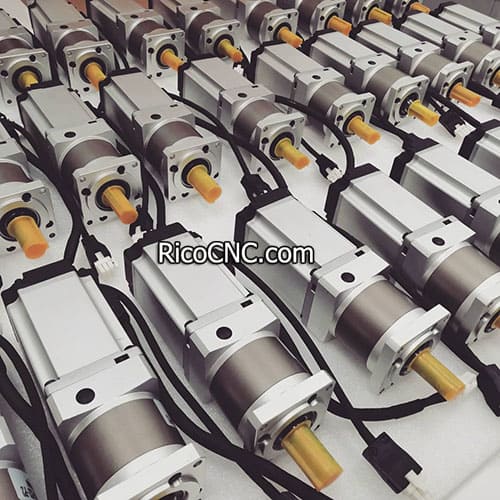
A speed reducer is a type of power transmission device commonly used in mechanical systems. it can be used in motorized machinery, vehicle systems, industrial equipment, and other applications. during using, people also called reducer, speed reducer. gearbox, planetary reducer,
The basic glossary of reducers you should may know, only you know the glossary, then you can use it smoothly.
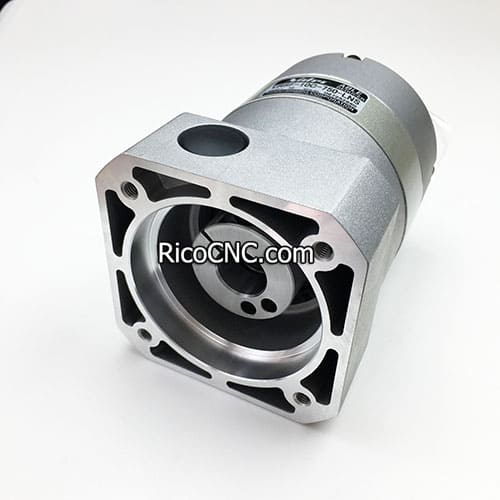
Nominal Output Torque:
A standard for load-carrying capacity of reducer. To ensure the working life of reducer the Max. limit of output torque when inputspeed is in the range of nominal speed.
Gear Ratio:
Ratio of input speed and output speed Gear Ratio = input speed / output speed
Nominal Input Speed:
The speed which could ensure the working life of reducer.
Max. Input Speed:
The Max. speed which reducer could bear, (Only suitable under cycle operation mode, please change the speed in the range of nominal input speed under continuous operation.)
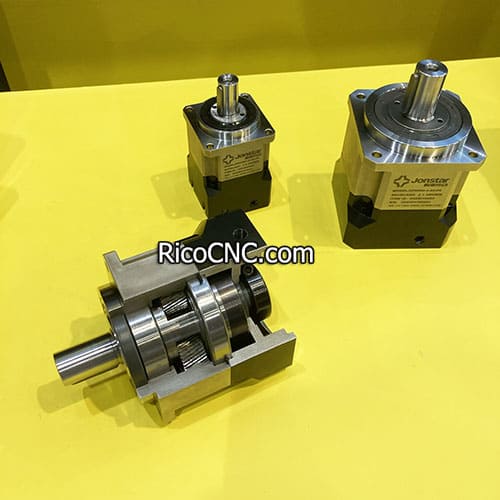
Emergency Stop Torque:
The Max. torque which the reducer could bear instantaneously, is the critical value which could make the internal mechanical structure of reducer deformed or even destroyed.
Cycle Operation S5:
Working period
Ed < 60%.
consecutive working time < 20min, is called cycle operation mode.
Continuous Operation S1:
Working period Ed> 60%consecutive working time> 20miniscalled continuous operation mode
Backlash:
The backlash is the maximum twist angle of the output shaft relative to the input. Backlash is measured with the input shaft locked, the output is then loaded with a defined test torque (060Series:0.31Nm.090Series:0.8Nm, 120Series:2.5Nm, 140Series:5.7Nm, 180Series: 12.5Nm, 220Series: 16.5Nm.) In order to overcome the internal gearhead friction, the small angular displacement at the output of the gear unit is the backlash value.
Torsional Rigidity:
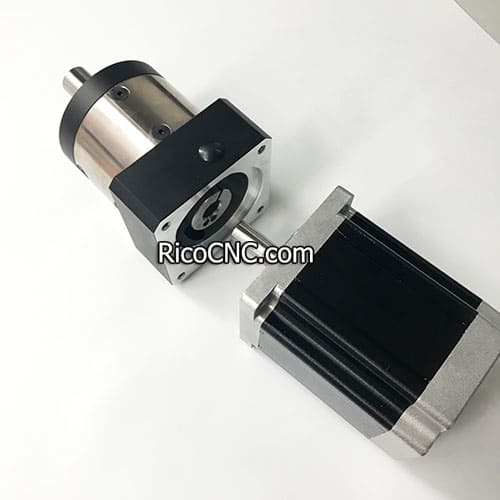
When the reducer is in the range of nominal output torque, due to the loading moment working, all components could havetraces amount elastic deformation (torsion). Under the combined action of the elastic deformation, there is traces amounthysteresis between input shaft and output shaft of reducer (Please refer to the Hysteresis Curve. ), which could bring therotating angle error of input and output shats. When loading moment disappears, elastic deformation would disappearmeanwhile the rotating angle error. The ratio of the loading torque and rotating angle error, is called torsional rigidity value.
Max. Axial Load: To keeping the reducer working life.
the Max. axial working load which the output end of reducer could bear.
Max. Radial Load: To keeping the reducer working life, the Max. working load which is perpendicular to the axial direction of output shaft. (1/2 L postion. )
Service Life: Life which under the conditions of nominal input speed, nominal output torque, periodical operation mode in working temperature
(Half-life under continuous operation mode.)
Noise: Reducer under no-load mode, input speed is 3000, the value which Noise Measurement machine get at One meter away postion.
Mass Moments of Inertia: The value which reducer input shaft try to keep itself rotating or still.
Efficiency: Reducer under nominal loading status, the ratio of output power and input power.
Hysteresis Curve:
if input shaft is locked, then two cirection of rotation of cutout for loading maximum acceleration torque (1.3 times the nominal outpuitorque), and then gradually unloading. Use instrument to record the torque diference Angle, the curve is a closed curve, we can calculatethe torsional rigidity value ofthe speed reducer.
RicoCNC is engaged in CNC spare parts for many years. we supply speed reducer, servo motor, encoder, spindle, solenoid valve, pump, etc. if you need to repair or replace a spare part, just let us know, we’ll try our best to service you. thanks.


 Send Email
 Skype
Skype WhatsApp